
The Morning It Won't Move
You hit the wall button on a chilly morning and the door groans, jerks a few inches, then stalls. Or it doesn't move at all — the opener motor hums, the chain or belt tightens, but the bottom panel stays put like it's glued to the slab. Sometimes you'll hear a faint crack or pop as it finally breaks free, and the rubber seal along the bottom looks torn or stretched afterward.
None of this means your garage door is broken in the way a snapped spring is broken. It usually means something is sticking, stiffening, or binding because of a hard overnight chill after one of our wet afternoons. North Florida doesn't get deep freezes often, but a cold front rolling through after a week of humid, rainy weather is exactly the setup that causes this.
What You'll Actually Notice
- The door is stuck flat to the concrete floor until you pull hard or tap the bottom edge with your foot.
- The opener strains, clicks, or reverses instead of lifting the door.
- Movement is slower than normal, with grinding or squeaking that wasn't there last week.
- The door opens partway, then stops as if something is catching it.
- A thin skin of frost or dampness is visible where the weatherstrip meets the slab.
Where a Technician Starts Looking
1. The Bottom Seal and Slab
This is the first thing we check because it's the most common cause. The rubber weatherstrip along the bottom of the door sits in a thin film of moisture from the last downpour. Overnight, if temperatures drop close to freezing, that moisture can bond the rubber to the concrete just enough to resist the opener's pull. The fix is simple: gently break the seal by hand or with a flat tool before running the opener, let the sun warm the slab, and consider a seal with a stiffer profile that holds its shape instead of flattening into standing water.
2. Tracks and Rollers
Next we look at the rollers and the track they ride in. Humidity swings common in this area cause rust to form on steel rollers and inside the track channel, and that rust grinds against itself when metal contracts slightly in cooler air. If the rollers feel gritty or you see orange streaking on the track, cleaning and relubricating with a silicone-based spray (not household oil, which attracts grit) usually restores smooth movement. Badly pitted rollers get replaced rather than cleaned, since rust damage doesn't fully reverse.
3. Springs and Their Tension
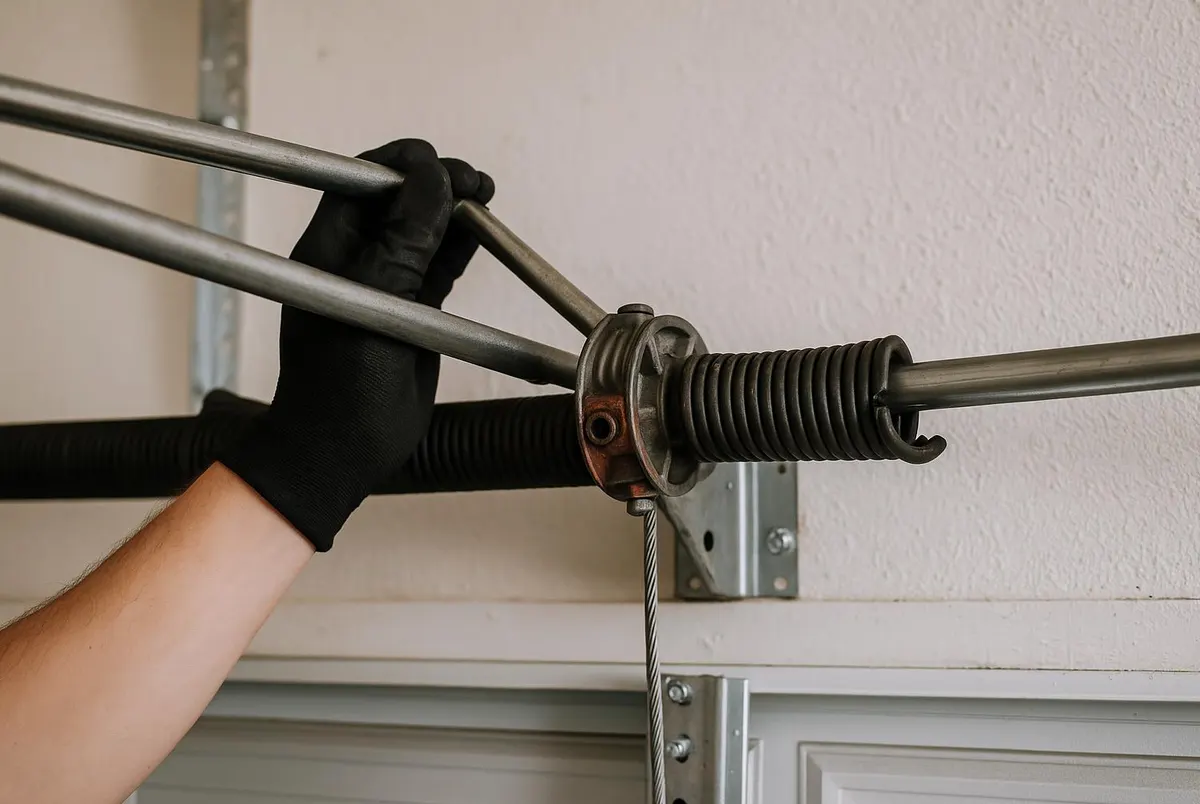
Torsion springs lose a small amount of lift capacity as the metal contracts in cold weather, which is why a door that lifted easily in October can feel heavier in December. A technician checks this by disconnecting the opener and lifting the door by hand — it should move with moderate, even effort and stay roughly where you leave it. If it feels noticeably heavier than it should, or drops on its own, the spring tension needs adjustment. This is not a homeowner task; torsion springs store enough force to cause serious injury, and adjusting them requires the right bars and a clear understanding of the door's weight rating, especially on the heavier wind-rated doors common in this area.
4. The Opener Itself
Cold mornings can also expose a limit setting that was already borderline. If the opener's force or travel limits are set too tight, the extra resistance from a stiff track or a slightly heavier spring is enough to trigger a safety reversal. We check the opener's force settings and the condition of the chain or belt tension before assuming the door itself is at fault. Loose chains rattle and skip teeth in cold weather more than they do in summer heat, so a quick tension check often solves what looks like a motor problem.
5. Cables and Pulleys
Last on the list, because it's the least common cause, are the lift cables. Condensation sitting on the pulleys or at the bottom bracket can lead to a light surface rust that makes the cable catch instead of running smoothly. A frayed strand caught in a pulley will make a distinct clicking sound as the door moves. If we find fraying, the cable gets replaced outright rather than patched — a cable under tension is not something to gamble on.
Why This Shows Up More in This Area
It's the combination that causes trouble: afternoon downpours soak the slab and the bottom seal, humidity keeps metal parts perpetually a little damp, and then a cold front drops temperatures enough overnight to tighten everything up at once. A door that's been neglected through a hot, humid summer — rollers never lubricated, seal never checked — is the one most likely to stick on the first truly cold morning of the season.
When to Call Pinetta Garage Door Repair
If breaking the seal by hand becomes a daily routine, if the door feels noticeably heavier than it used to, or if you hear new grinding or clicking, it's time to have it looked at rather than keep forcing it. We handle Garage Door Maintenance & Tune-Up visits that cover roller lubrication, track alignment, and seal replacement before a cold snap turns a minor stick into a stuck door, and we handle Garage Door Cable Repair when rust or fraying has gone past the point of a quick fix. Either way, we check the whole system in the same order outlined above so we're fixing the actual cause, not just the symptom you noticed.
If your garage door is fighting you on cold mornings, call Pinetta Garage Door Repair and we'll come take a look — serving Pinetta, Madison, Lee, Greenville, Cherry Lake, Valdosta, Live Oak, and Perry.