
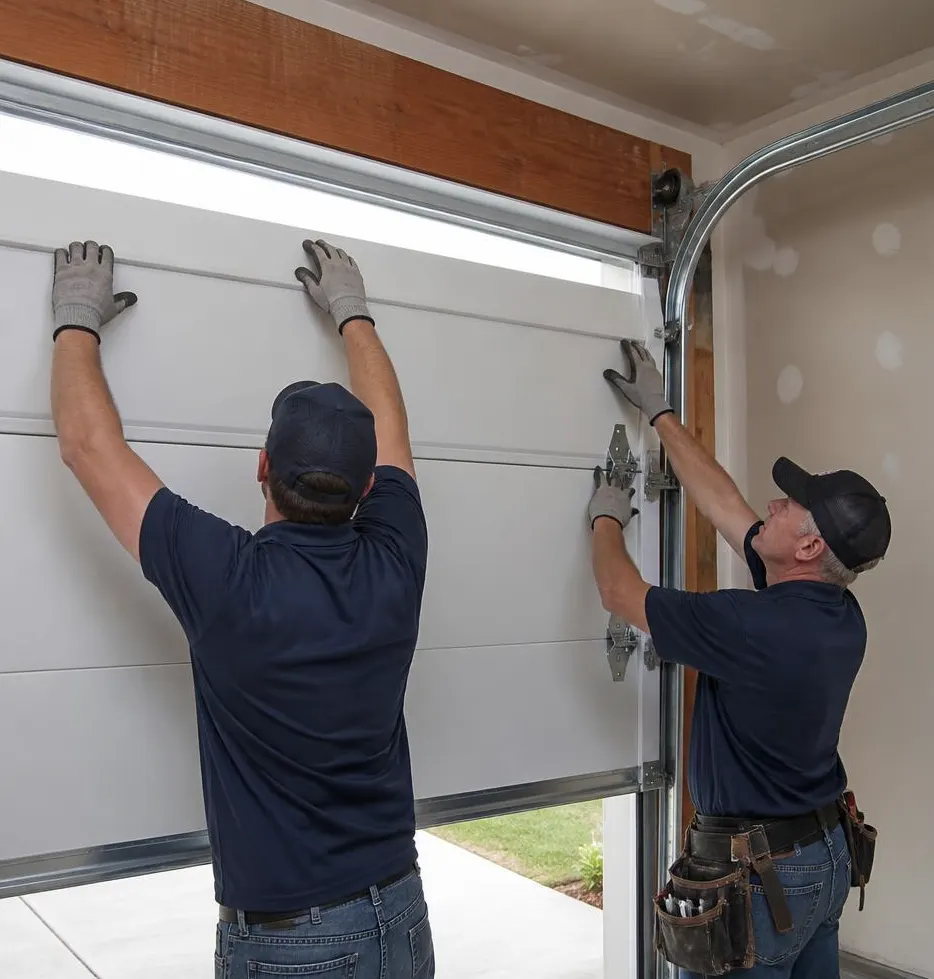
What a Technician Sees on This Kind of Call
The scene is almost always the same. A homeowner noticed the garage door sagging on one side or heard a loud bang from the garage, looked up a video, and decided to replace the torsion spring themselves. By the time we get the call, there's a bent winding bar on the floor, a gouge in the drywall or a cracked windshield from a spring that let go, or worse, someone is headed to urgent care with a hand injury or a deep cut from a snapped cable. The door itself is usually stuck halfway open, held up by a 2x4 wedged under the track, because the spring that was supposed to carry its weight is now in pieces.
Why Garage Door Springs Are So Dangerous
A standard torsion spring is wound tight enough to store 100 to 150 pounds of torque, enough force to lift a door that can weigh 150 to over 400 pounds depending on size and material. That torque has to be loaded and unloaded under control, using the correct tools. When it's released suddenly, through a slipped winding bar, a cheap tool substitute, or a spring that fails mid-adjustment, it doesn't just drop. It whips. People have lost fingers, taken a winding bar to the face, or been struck hard enough to fracture bones. Extension springs carry similar risk in a different form; without a safety cable running through the coil, a failed spring can become a projectile across the garage.
The Specific Mistakes That Cause Injuries
- Using a screwdriver or makeshift bar instead of properly sized winding bars. This is the single most common cause of slipped-spring injuries.
- Not knowing the wind direction. Winding a torsion spring the wrong way builds dangerous, unpredictable tension.
- Working alone with no one to call for help if something goes wrong.
- Removing the old spring before securing the door with locking pliers or a C-clamp on the track, so it drops unexpectedly.
- Guessing at spring size. The wrong wire gauge or wind length puts uneven, excessive strain on the system.
- Skipping eye protection when a sudden release or fraying cable can throw metal fragments.
How Local Conditions Make This Riskier
Springs and cables in this part of Florida take a beating that drier climates don't deal with. Humidity and the salt-tinged air closer to the coast accelerate rust on spring coils and cable strands, weakening them in ways that aren't visible from the garage floor. A rusted spring can look intact right up until it's under load, and a corroded cable can fray and snap without warning. Heavier insulated doors built to meet wind-load expectations for hurricane season also require higher-tension springs, which means more stored energy if something goes wrong during a DIY swap. Humidity swelling in wood-paneled doors can throw off the balance of the whole system, so what looks like a simple spring replacement is sometimes really a balance problem that needs diagnosing first.
What Actually Prevents These Injuries
- Treat torsion springs as a two-person job with the correct winding bars, never substitutes, and never rushed.
- Secure the door with clamps before touching the spring system.
- Wear eye protection and heavy gloves for every step, including cable handling.
- Replace springs in pairs on double torsion systems, since one worn spring usually means the other is close behind.
- Have cables, drums, and end bearings inspected at the same time, since a fix that only addresses the spring can leave another failure point in place.
- If there's any doubt about wind direction, spring size, or door weight, stop and call a technician before loading tension into anything.
When to Call Pinetta Garage Door Repair
If your door is sagging on one side, slammed shut on its own, or you've heard a loud bang from the garage followed by a door that won't budge, that's almost always a spring failure, and it's not a safe DIY fix. Our Garage Door Spring Repair service covers torsion and extension systems for homes throughout Pinetta, Madison, Lee, Greenville, Cherry Lake, Valdosta, Live Oak, and Perry, using properly rated tools and matched spring sets so the door is balanced correctly on both sides. We also offer Garage Door Maintenance & Tune-Up visits that catch rust, fraying cables, and uneven tension before they turn into a failed spring and a trip to the ER.
If your garage door spring has already let go, or it's showing warning signs like sagging, slow response, or visible rust on the coils, call Pinetta Garage Door Repair today. We'll come out, handle the repair safely, and make sure the rest of the system is sound before we leave.