
The Call That Starts This Argument
A technician gets this call a lot: someone's building a workshop, a hay barn, or a small storage building behind the house, and they want a quote on "a garage door." When the tech shows up, it turns out the owner wants to park farm equipment, run power tools all day, or open and close the door a dozen times during harvest season. That's not a garage door job anymore. That's a commercial door job wearing a residential door's clothes. The spouse who said "just get whatever's cheapest at the hardware store" is usually the one who loses this argument.
It's Not Just Size — It's Everything Underneath
A residential garage door and a commercial or warehouse overhead door look similar from the driveway, but they're built for completely different jobs.
Residential Doors
- Lighter-gauge steel or aluminum panels, sometimes with a layer of insulation
- Torsion springs rated for roughly 10,000 open-close cycles, which is plenty for a door used a few times a day
- Openers in the 1/2 HP to 3/4 HP range, designed for occasional use
- Standard widths for one or two vehicles
Commercial and Warehouse Doors
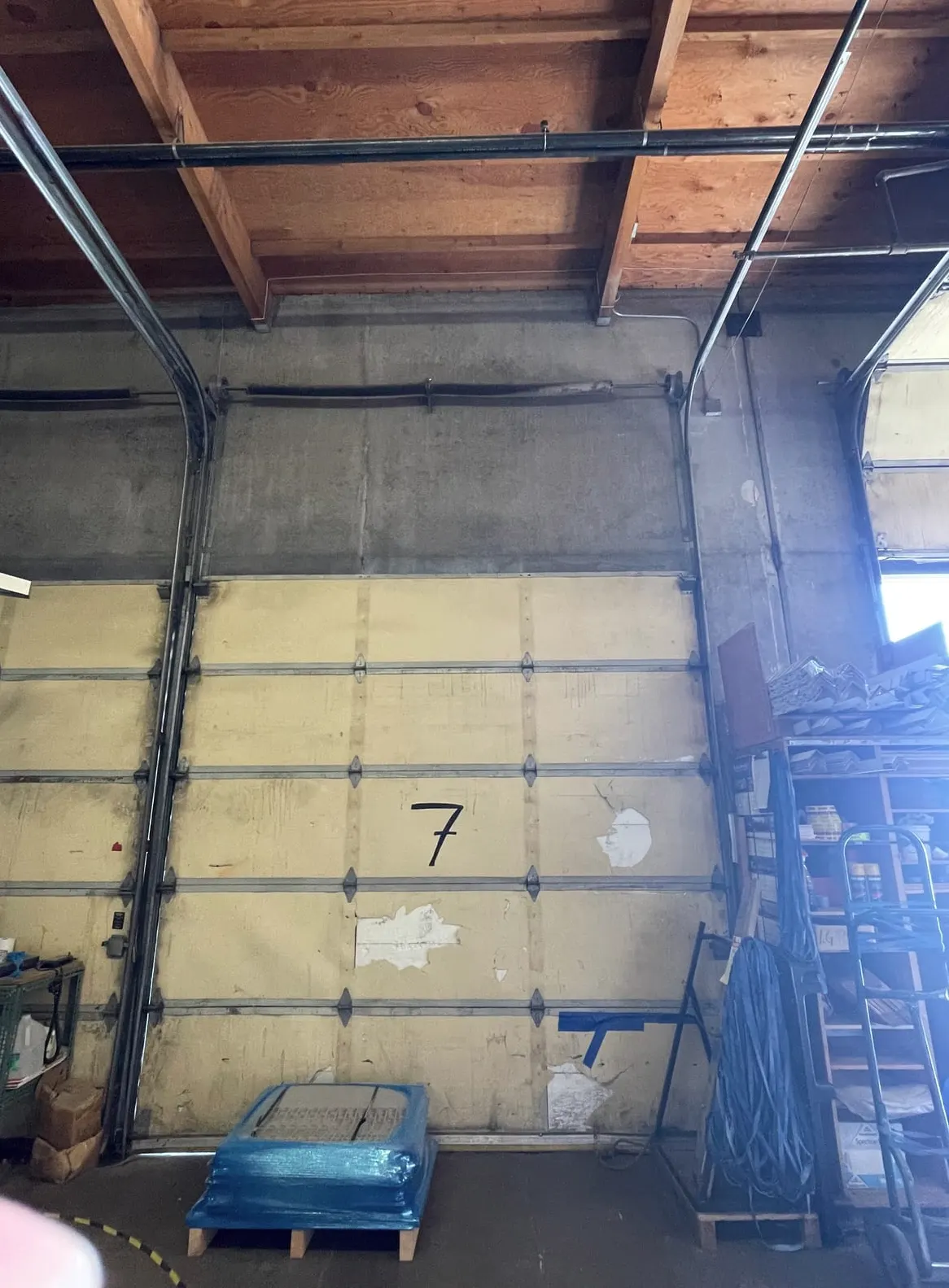
- Heavier gauge steel, built to survive constant impact, forklifts backing close, and daily wear
- High-cycle torsion springs or spring systems rated for 50,000, 100,000, or more cycles
- Commercial-grade operators, often jackshaft openers mounted beside the door rather than overhead, built for frequent starts and stops all day
- Wider, taller openings to fit trucks, trailers, or large equipment
- Thicker insulation packages when the building needs climate control
Put a residential spring system on a door that gets opened 40 times a day and it will fail long before its rated lifespan. Put a commercial-grade door and opener on a two-car garage and the homeowner is paying for strength and cycle life they'll never use.
Why This Matters More Here Than It Would Up North
This part of Florida adds a few wrinkles that don't show up in a generic buying guide. Heat and humidity swell wood-framed sections and accelerate rust on exposed hardware, especially on older steel doors that weren't galvanized. Afternoon downpours during hurricane season push water and debris toward thresholds and bottom seals, and commercial doors that sit open for loading all day take the brunt of that. Wind-load requirements for garage and overhead doors in storm-prone areas also apply differently depending on the building's use and size, so a replacement door for a farm building or small commercial space needs to be rated for the wind exposure of that structure, not just copied from whatever is installed at the house next door.
For properties around Madison, Lee, Greenville, and the rest of the surrounding communities, it's common to have a mix on one piece of land: a standard residential door on the house and a heavier-duty overhead door on a detached shop, barn, or small commercial building. Treating both the same way, whether that means over-speccing the house door or under-speccing the shop door, is where people run into trouble.
Maintenance Looks Different Too
A door that cycles dozens of times a day needs attention more often than one that opens twice a day for the family car.
- Lubrication: High-cycle doors need rollers, hinges, and torsion springs lubricated more frequently to keep up with the wear from constant movement.
- Cable and spring checks: Heavier doors put more strain on lift cables and springs. Fraying or rust shows up faster, especially with the humidity here, and it should be caught before a cable snaps under load.
- Bottom seals and weatherstripping: These degrade faster on doors exposed to sun and rain all day, which matters for a shop or warehouse door that sits open during work hours.
- Sensor and safety checks: Commercial settings often have more foot traffic and equipment movement near the door, so photo-eye sensors and auto-reverse functions need regular testing.
- Panel inspection: Dents and rust spots that start small on a steel panel can spread quickly in salt air or constant moisture, weakening the panel's structure over time.
Residential doors still need seasonal maintenance, but the intervals and the stakes are lower. A missed inspection on a home garage door is an inconvenience. A missed inspection on a heavily used commercial door can mean a dangerous failure mid-cycle.
When to Call Pinetta Garage Door Repair
If there's a disagreement at the house about whether a shop, barn, or small business building needs a residential or commercial-grade door, that's worth a second opinion before any money gets spent. Pinetta Garage Door Repair can walk the property, look at how the door will actually be used, and recommend the right spring system and opener for that cycle count and wind exposure. For doors already in service, our Garage Door Maintenance & Tune-Up service catches the wear patterns specific to heavy-use doors before they turn into a breakdown, and our Garage Door Panel Replacement work can swap out rusted or dented sections without replacing the whole unit.
Whether it's the house, the shop, or both, call Pinetta Garage Door Repair to get it sorted out properly before storm season or daily use makes the decision for you.